Gumbo recipe explained step by step
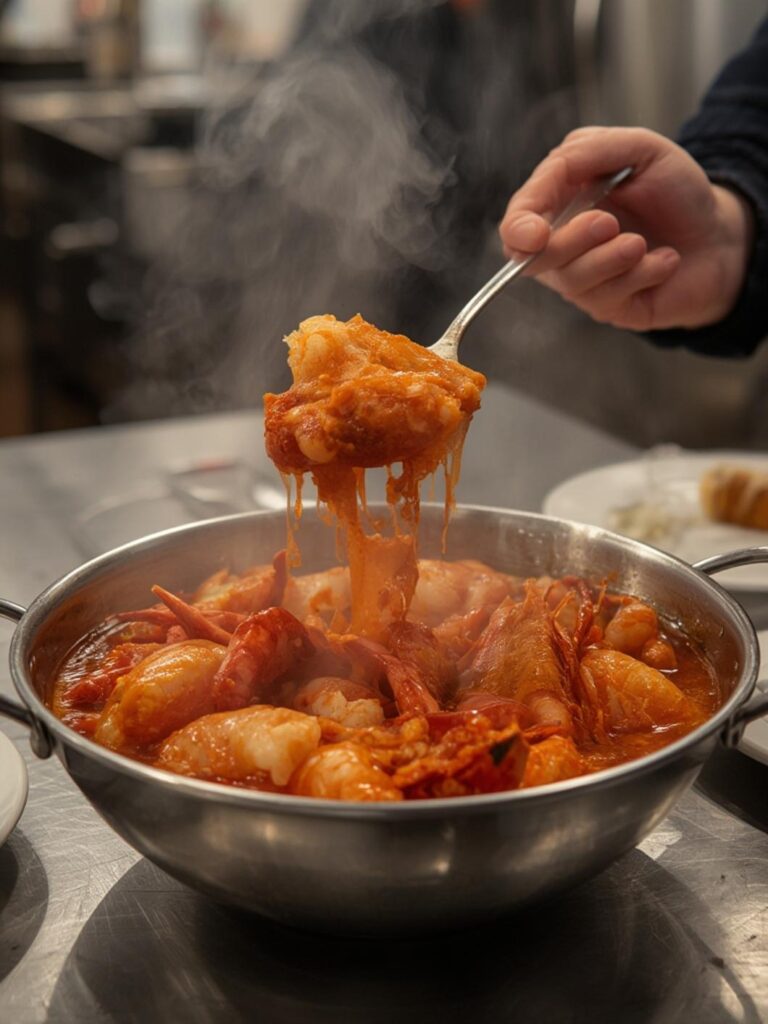
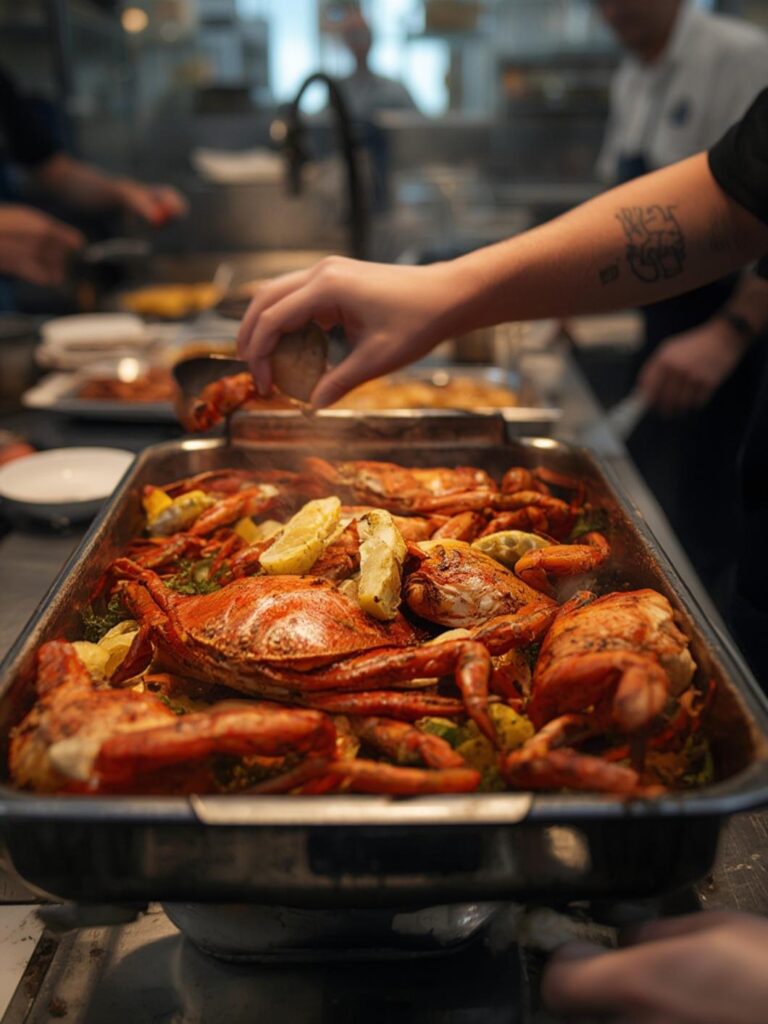
Have you ever tasted a rich, flavorful bowl of seafood gumbo and wondered if you could recreate that magic in your own kitchen? This classic Louisiana dish combines the bounty of the sea with bold spices and the famous roux base that gives this iconic stew its distinctive character. Making a seafood gumbo recipe at home allows you to control the ingredients while experiencing the joy of creating something truly special. Many home cooks are intimidated by the complexity of a gumbo gumbo recipe, but with the right guidance, you’ll discover it’s well worth the effort.
Table of Contents
Materials & Supplies
For the Roux:
– ½ cup vegetable oil or butter
– ½ cup all-purpose flour
Seafood Ingredients:
– 1 pound medium shrimp, peeled and deveined
– 1 pound crab meat (lump or claw)
– 1 pound oysters with liquid (optional)
– 8 ounces white fish fillets, cut into chunks (optional)
Vegetables & Aromatics:
– 1 large onion, diced
– 2 bell peppers (green and red), diced
– 4 celery stalks, diced
– 6 cloves garlic, minced
– 1 can (14.5 oz) diced tomatoes
– 1 tablespoon fresh thyme (or 1 teaspoon dried)
– 2-3 bay leaves
Spices & Seasonings:
– 2 tablespoons Creole seasoning
– 1 tablespoon filé powder (ground sassafras)
– 1 teaspoon cayenne pepper (adjust to taste)
– Salt and black pepper to taste
– Hot sauce to taste
Other Ingredients:
– 8 cups seafood stock or chicken broth
– 1 pound andouille sausage, sliced (optional)
– 2 tablespoons Worcestershire sauce
– 1 tablespoon gumbo filé powder (for serving)
– Cooked white rice for serving
– Green onions, chopped (for garnish)
Equipment:
– Large, heavy-bottomed pot or Dutch oven
– Wooden spoon for stirring roux
– Measuring cups and spoons
– Sharp knife and cutting board
– Ladle for serving
Timing / Cooking Schedule
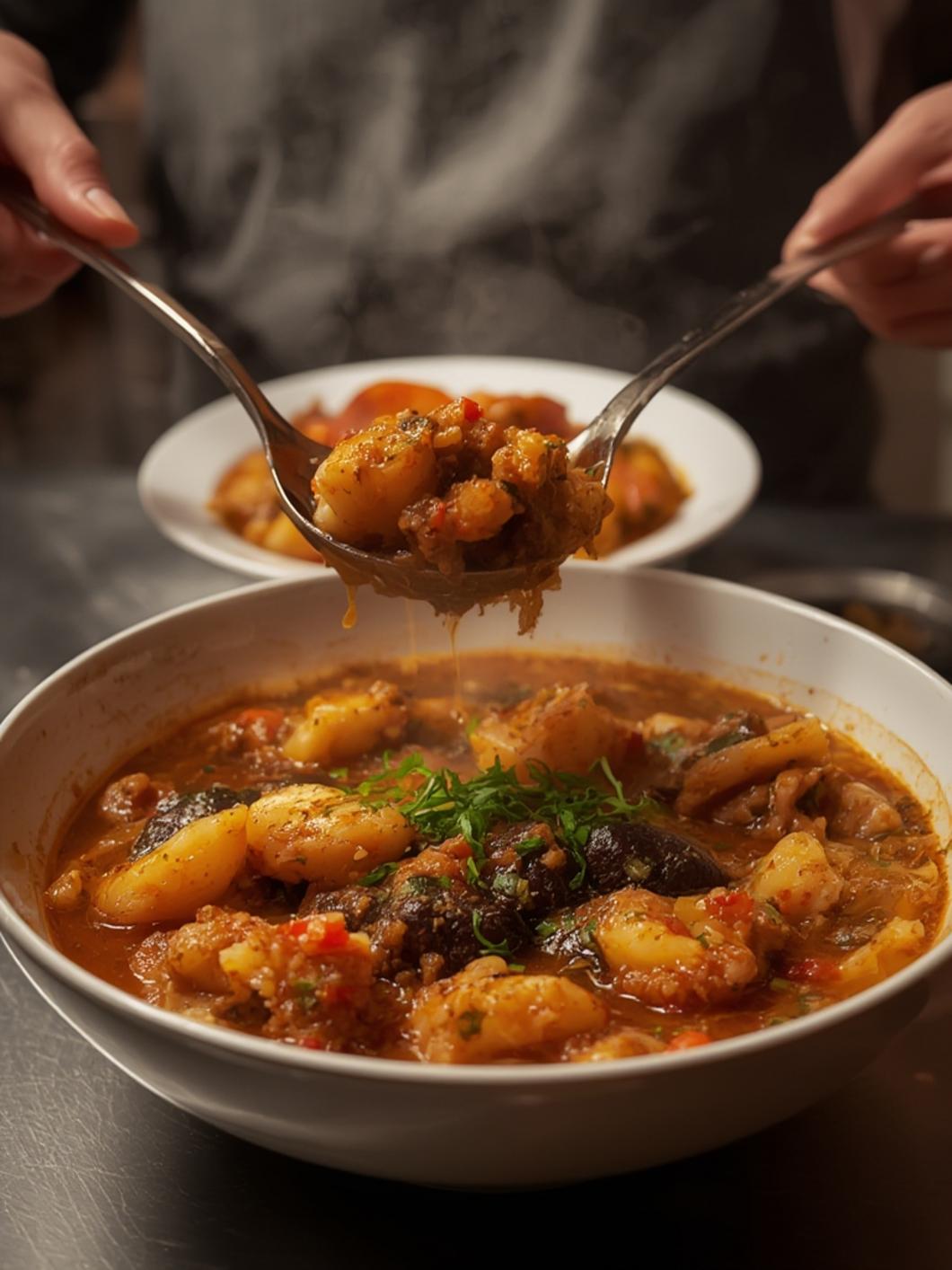
Preparing authentic seafood gumbo is a labor of love that rewards patience:
– Prep Time: 30 minutes (chopping vegetables, preparing seafood)
– Roux Making: 20-30 minutes (requires constant attention)
– Cooking Time: 1.5 to 2 hours (simmering develops flavor)
– Total Time: About 3 hours
– Serves: 8-10 people
Unlike quick weeknight meals, gumbo benefits from slow cooking. The good news? Most of the time is hands-off simmering, allowing flavors to meld together beautifully.
Step-by-Step Instructions
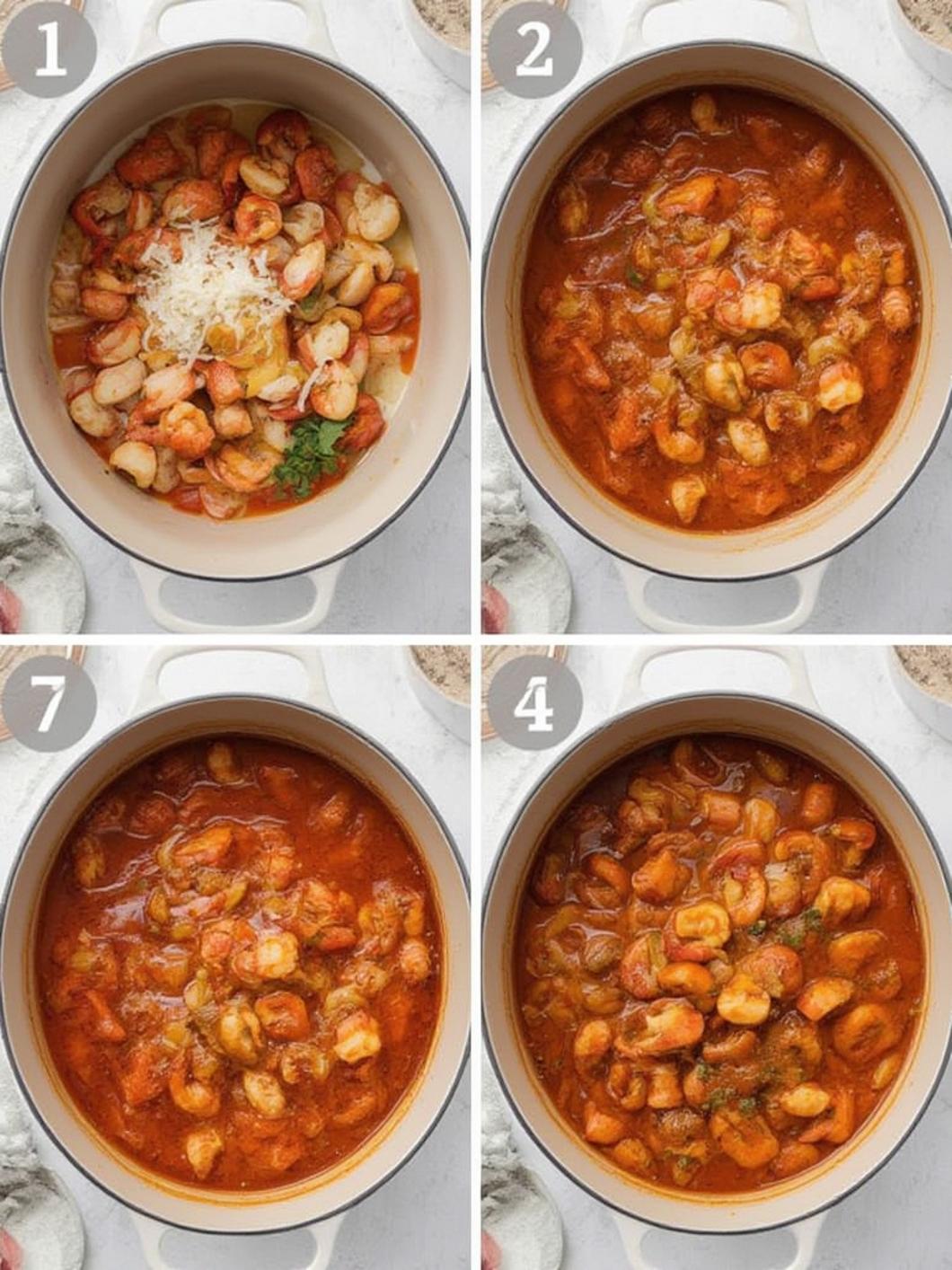
1. Make the Roux:
– Heat oil in a heavy-bottomed pot over medium heat.
– Gradually add flour, stirring constantly.
– Cook, stirring continuously, until the roux reaches a dark chocolate color (20-30 minutes). Don’t rush this step—it’s the foundation of your seafood gumbo recipe.
2. Add the Trinity:
– Immediately add diced onion, bell pepper, and celery to the roux.
– Cook until vegetables soften, about 5-7 minutes.
– Add garlic and cook for another minute until fragrant.
3. Build the Base:
– Pour in seafood stock slowly while stirring continuously to prevent lumps.
– Add diced tomatoes, Creole seasoning, bay leaves, thyme, and Worcestershire sauce.
– If using andouille sausage, add it now.
– Bring to a boil, then reduce to a simmer.
4. Simmer:
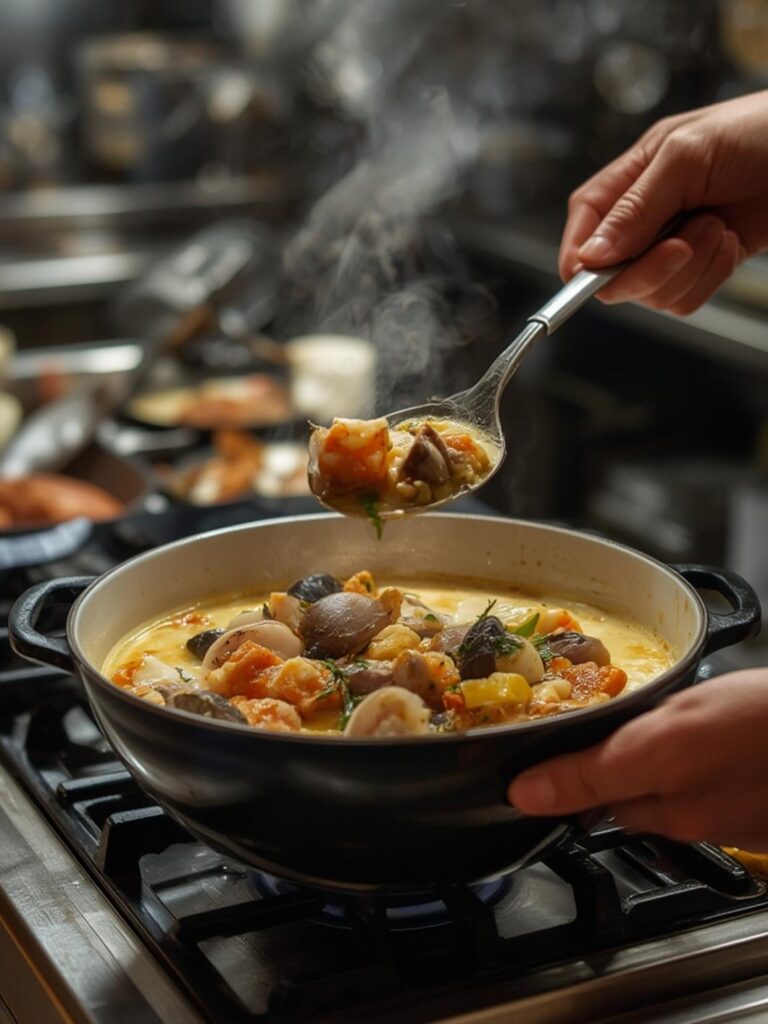
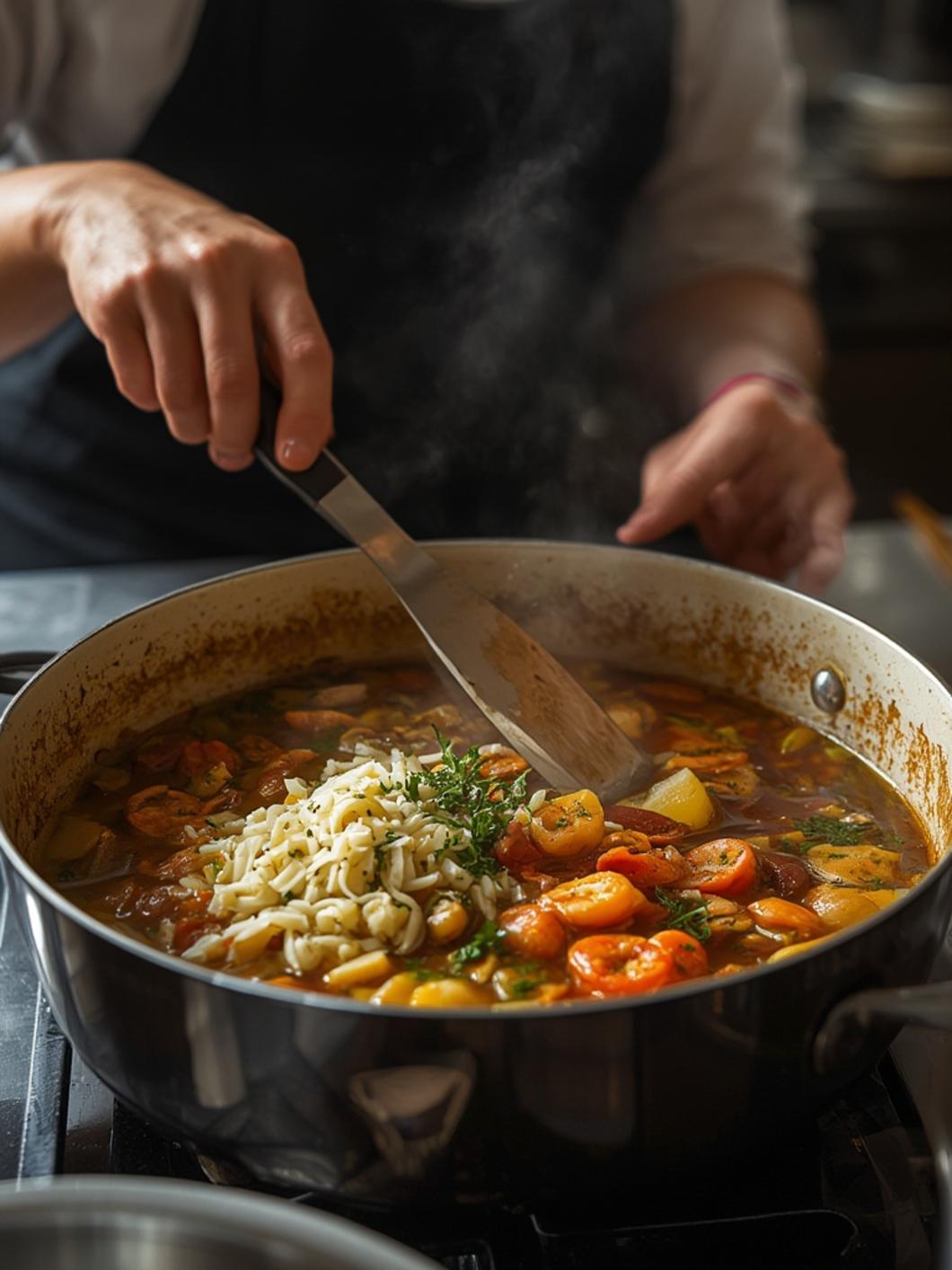
– Let the gumbo gumbo recipe simmer uncovered for 1 hour, stirring occasionally.
– Taste and adjust seasonings as needed.
5. Add Seafood:
– Add fish pieces first, simmer for 5 minutes.
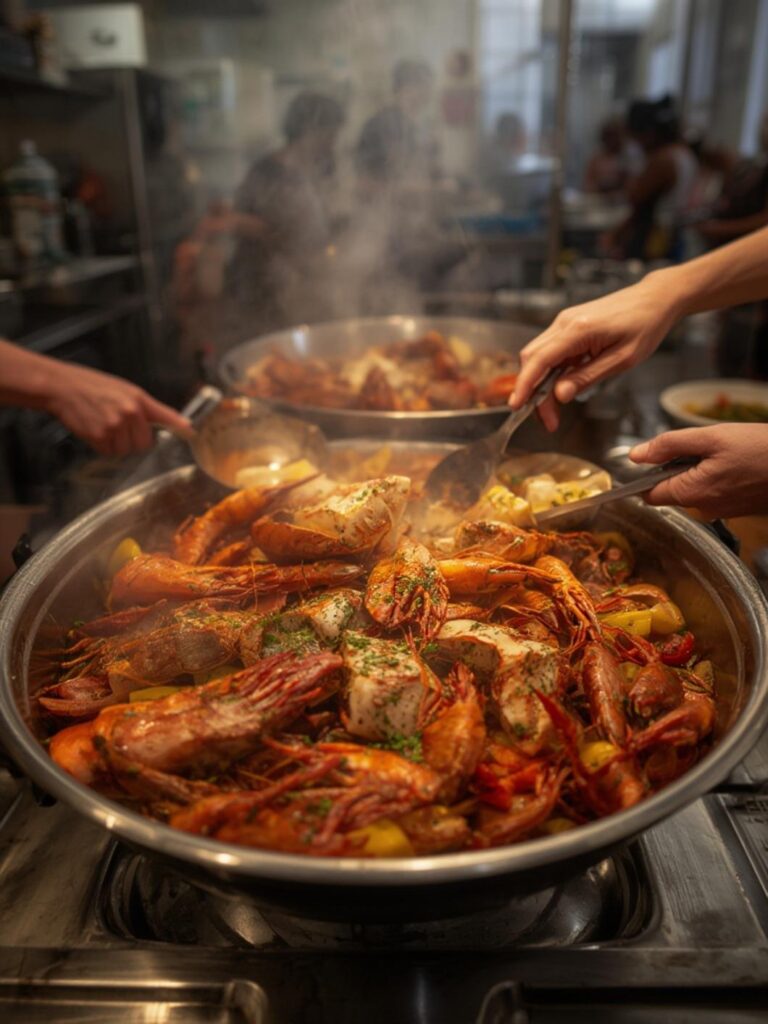
– Add shrimp and crab meat, cook for another 5-7 minutes until shrimp turns pink.
– If using oysters, add them last with their liquor and simmer just 2-3 minutes.
6. Finish:
– Turn off heat and let stand for 15 minutes.
– Remove bay leaves.
– Serve over rice with chopped green onions and filé powder on the side.
Nutritional Benefits / Advantages
Seafood gumbo offers impressive nutritional value:
– Excellent source of lean protein from various seafood
– Rich in omega-3 fatty acids for heart health
– Provides vitamins and minerals from the vegetable base
– Celery, onions, and bell peppers add fiber and antioxidants
– When made at home, you can control sodium and fat content
Tips, Alternative Methods, or Cooking Advice
– Roux Alternatives: For a gluten-free version, use rice flour or a gluten-free 1:1 flour blend.
– Seafood Options: Don’t feel obligated to use all seafood types—choose your favorites.
– Vegetable Additions: Okra makes a wonderful thickening agent (add 2 cups sliced okra).
– Spice Level: Adjust cayenne and hot sauce to your preference.
– Make Ahead: Gumbo actually tastes better the next day as flavors develop further.
– Freezer-Friendly: Make the base without seafood, freeze, then add seafood when reheating.
Common Mistakes to Avoid
1. Rushing the Roux: A proper roux takes time—rushing leads to underdeveloped flavor or burning.
2. Overcooking Seafood: Add seafood toward the end to prevent it from becoming tough and rubbery.
3. Underseasoning: Taste as you go and adjust seasonings accordingly.
4. Cooking with Lid On: Authentic gumbo simmers uncovered to achieve proper thickness.
5. Adding All Seafood at Once: Different seafood requires different cooking times.
Storage / Maintenance Tips
– Refrigeration: Store cooled gumbo in airtight containers for 3-4 days.
– Freezing: For best results, freeze gumbo base without seafood for up to 3 months.
– Reheating: Warm slowly over medium-low heat, adding fresh seafood during the last few minutes.
– Revitalizing: Add fresh herbs or a splash of hot sauce when reheating to brighten flavors.
Conclusion
Creating an authentic seafood gumbo at home connects you to one of America’s most celebrated culinary traditions. The process may take time, but the complex flavors and rich texture make this seafood gumbo recipe worth every minute spent. Remember that gumbo is as much about the process as the result—there’s something deeply satisfying about nurturing a pot of gumbo gumbo recipe from roux to table. Why not gather your ingredients this weekend and treat your family to this classic Louisiana treasure? Share your gumbo adventures in the comments below!
FAQs
Can I make gumbo without making a roux?
While the roux is traditional and provides the distinctive flavor and color, you can make a simplified version using okra and filé powder as thickeners instead.
How do I know when my roux is the right color?
A proper gumbo roux should be the color of dark chocolate or peanut butter. If it smells nutty and looks rich brown (not black), it’s ready.
Can I use frozen seafood for gumbo?
Yes! Thaw completely before adding, and remember that pre-cooked frozen seafood should be added just before serving to prevent overcooking.
Is filé powder necessary for authentic gumbo?
While traditional, filé powder is optional. It adds a distinctive flavor and helps thicken the gumbo, but you can still make delicious gumbo without it.
How can I make my gumbo less spicy without losing flavor?
Reduce or omit the cayenne pepper and hot sauce, and ensure your Creole seasoning is mild. You can also serve the hot sauce on the side for those who want more heat.