How to make seafood chowder at home step by step
Ever craved a warm, comforting bowl of creamy seafood chowder? This easy seafood chowder recipe brings you a rich, homemade seafood soup packed with shrimp, crab, and fresh fish. Perfect for cozy dinners, this creamy seafood chowder is both simple to make and full of flavor.
Table of Contents
Ingredients for seafood chowder at home step by step
Chef’s note: The first time I made this, I was honestly nervous. Now it’s one of the easiest things in my kitchen.
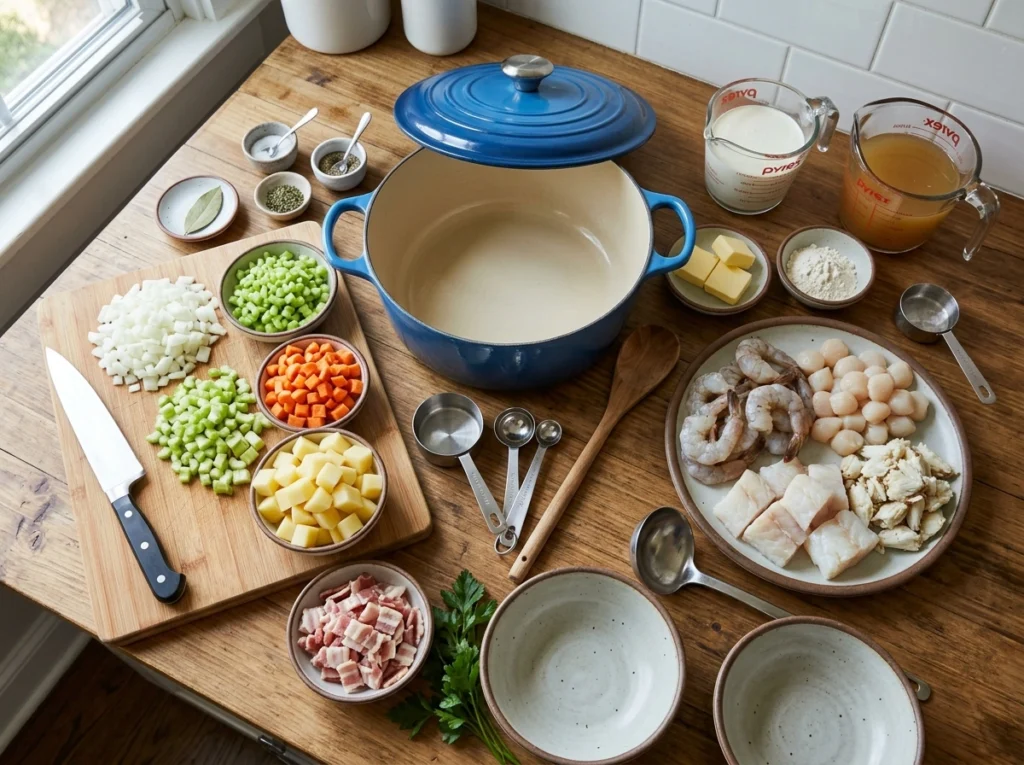
Ingredients for Seafood Chowder
Ingredients:
– 1 pound mixed seafood (shrimp, scallops, white fish, crab meat)
– 4 slices bacon, chopped
– 1 medium onion, diced
– 2 celery stalks, finely chopped
– 2 medium carrots, diced
– 2 medium potatoes, peeled and cubed
– 2 cloves garlic, minced
– 4 cups seafood or chicken stock
– 2 cups heavy cream
– 2 tablespoons butter
– 3 tablespoons all-purpose flour
– 1 bay leaf
– 1 teaspoon dried thyme
– Salt and pepper to taste
– Fresh parsley for garnish
Kitchen Tools:
– Large heavy-bottomed pot or Dutch oven
– Wooden spoon
– Chef’s knife
– Cutting board
– Measuring cups and spoons
– Ladle
– Soup bowls for serving
How Long Does seafood chowder at home step by step Take to Make?
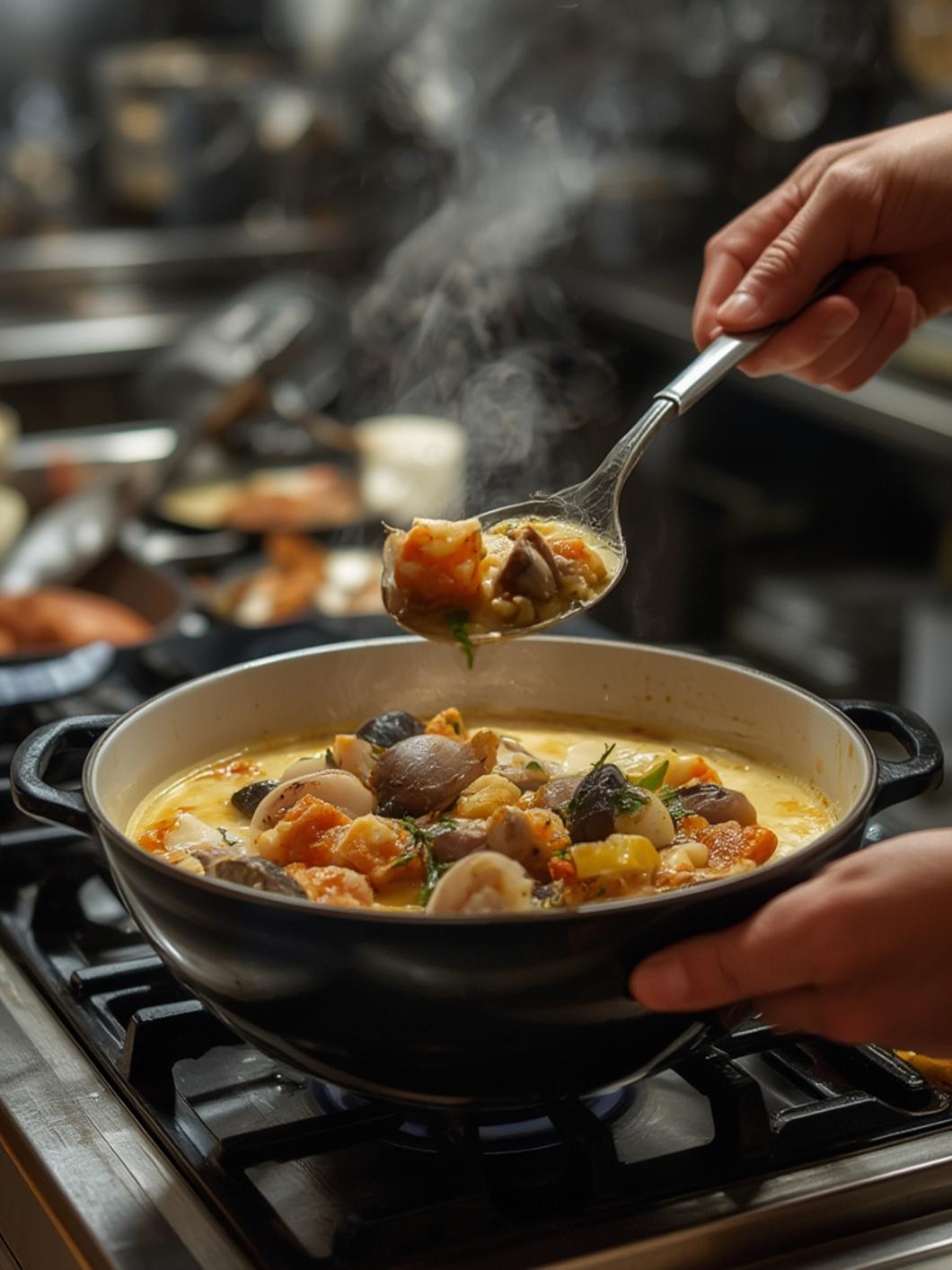
Preparing this hearty chowder takes approximately 45 minutes from start to finish:
– Prep time: 15 minutes
– Cooking time: 30 minutes
– Serves: 6 people
Unlike many other seafood soups that require hours of simmering, this chowder comes together relatively quickly while still developing deep flavor. This makes it perfect for both weeknight dinners and special occasions when you want something impressive without spending all day in the kitchen.
How to Make seafood chowder at home step by step (Step-by-Step)
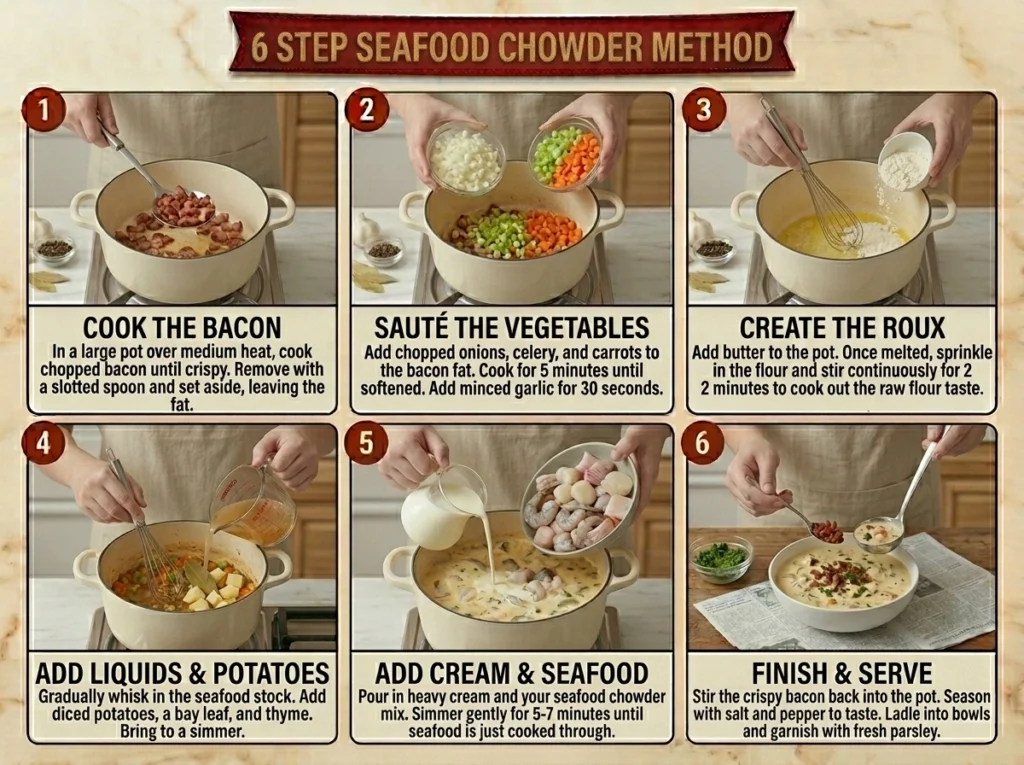
How to Make Seafood Chowder Step by Step.
1. Cook the bacon: In a large pot over medium heat, cook the chopped bacon until crispy, about 5-7 minutes. Remove bacon with a slotted spoon and set aside, leaving the bacon fat in the pot.
2. Sauté the vegetables: Add onions, celery, and carrots to the bacon fat and cook for 5 minutes until softened. Add garlic and cook for another 30 seconds until fragrant.
3. Create the roux: Add butter to the pot. Once melted, sprinkle in the flour and stir continuously for 2 minutes to cook out the raw flour taste.
4. Add liquids and potatoes: Gradually whisk in the seafood stock, ensuring no lumps form. Add potatoes, bay leaf, and thyme. Bring to a simmer.
5. Simmer: Cook for about 15 minutes, or until potatoes are fork-tender.
6. Add cream and seafood: Pour in the heavy cream and add your seafood chowder mix. Simmer gently for 5-7 minutes until seafood is just cooked through. Be careful not to overcook or the seafood will become tough.
7. Season: Add the crispy bacon back to the pot. Season with salt and pepper to taste.
8. Serve: Ladle your seafood chowder recipe into bowls and garnish with fresh parsley.
Nutritional Benefits of seafood chowder at home step by step
This chowder isn’t just delicious—it’s packed with nutrients! Seafood provides high-quality protein, omega-3 fatty acids, and essential minerals like selenium and iodine. Potatoes offer complex carbohydrates and vitamin C, while the vegetables add fiber, vitamins, and antioxidants. Though cream-based, a moderate portion as part of a balanced meal provides substantial nutritional benefits.
Expert Tips for the Best seafood chowder at home step by step
– For a lighter version, substitute half-and-half for heavy cream
– Make it gluten-free by using rice flour or cornstarch as a thickener
– Add corn kernels for sweetness and texture
– For a spicy kick, add a pinch of cayenne pepper or red pepper flakes
– Try adding leeks instead of or in addition to onions for a more complex flavor
– Use clam juice for a more pronounced seafood flavor
Common Mistakes When Making seafood chowder at home step by step
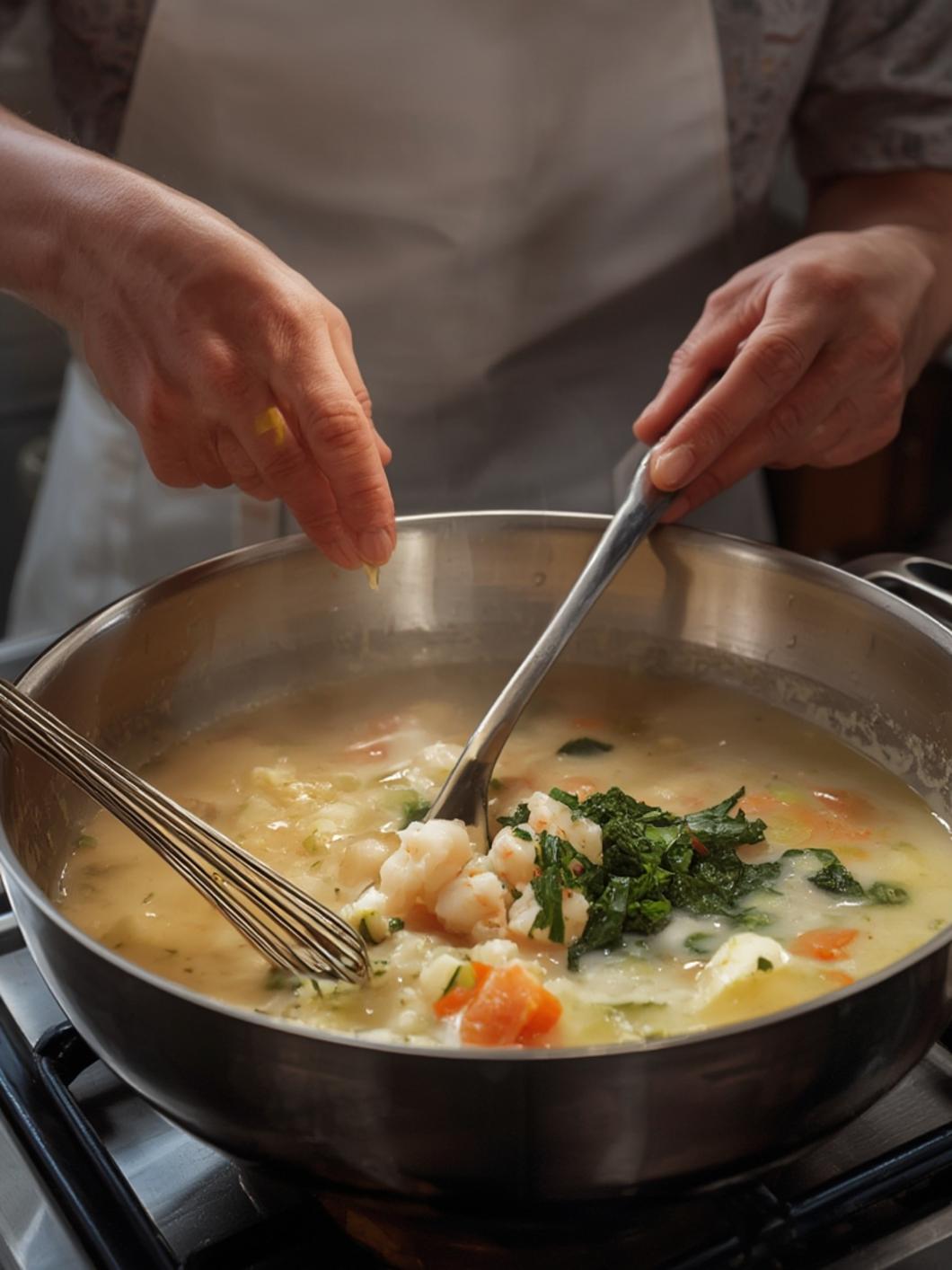
1. Overcooking the seafood: Add seafood near the end of cooking and simmer just until done. Overcooked seafood becomes tough and rubbery.
2. Boiling after adding cream: Always reduce heat to a gentle simmer after adding cream to prevent curdling.
3. Under-seasoning: Seafood soups need proper seasoning. Taste and adjust salt and pepper at the end of cooking.
4. Rushing the base: Take time to properly sauté the vegetables and develop the roux for the best flavor foundation.
How to Store seafood chowder at home step by step
Store leftover chowder in an airtight container in the refrigerator for up to 3 days. Reheat gently on the stovetop over medium-low heat, stirring occasionally to prevent scorching. Add a splash of milk or cream if the chowder becomes too thick after refrigeration.
For longer storage, you can freeze the base without the seafood and cream for up to 3 months. When ready to serve, thaw completely, bring to a simmer, and add fresh seafood and cream to finish.
Conclusion
Creating a homemade seafood chowder is one of the most satisfying cooking experiences you can have. The rich, creamy texture paired with tender seafood creates a meal that’s both comforting and elegant. By following this seafood chowder recipe, you’ve mastered a versatile dish perfect for any season. Whether you’re serving it for a casual family dinner or as the starter for a dinner party, this chowder is sure to impress. We’d love to hear about your experience making this recipe—share your results or ask questions in the comments below!
Frequently Asked Questions About seafood chowder at home step by step
Can I use frozen seafood for this chowder?
Yes, frozen seafood works well, but thaw it completely and pat dry before adding to avoid excess water in your chowder.
How can I make this chowder dairy-free?
Substitute the cream with full-fat coconut milk and use olive oil instead of butter for the roux.
What’s the best way to thicken seafood chowder if it’s too thin?
Make a slurry with 1 tablespoon cornstarch and 2 tablespoons cold water, then stir into simmering soup until it reaches desired consistency.
Can I make this chowder ahead of time for a party?
Prepare the base a day ahead but add the seafood and cream just before serving for the best texture and flavor.
What’s the best bread to serve with seafood chowder?
A crusty sourdough bread or warm, buttery biscuits make the perfect accompaniment for dipping.