
Homemade Chicken Broth Recipe (Easy & Flavorful)
If you’ve been searching for a Chicken Broth Recipe recipe that actually delivers on its promise, this is it. I’ve tried enough disappointing versions to know what makes this one work.
Table of Contents
Ingredients for Chicken Broth
Chef’s note: This is hands-down one of my favorite weeknight dinners. My family requests it almost every week.
For the broth base:
– 1 whole chicken carcass (or 3-4 pounds of chicken bones)
– 2 medium yellow onions, quartered (skin on is fine)
– 3 carrots, roughly chopped
– 3 celery stalks with leaves, roughly chopped
– 6 garlic cloves, smashed
– 2 bay leaves
– 1 tablespoon black peppercorns
– 1 tablespoon sea salt (adjust to taste)
– 2 tablespoons apple cider vinegar (helps extract nutrients from bones)
– Enough cold water to cover ingredients by 2 inches
Optional aromatics:
– Fresh herbs (parsley, thyme, rosemary)
– 1 leek, white and light green parts only
– 1-inch piece of ginger, sliced
Equipment needed:
– Large stockpot (8-12 quarts)
– Fine-mesh strainer
– Large bowl or container
– Ladle
– Storage containers (glass jars or freezer-safe containers)
How Long Does Chicken Broth Take to Make?
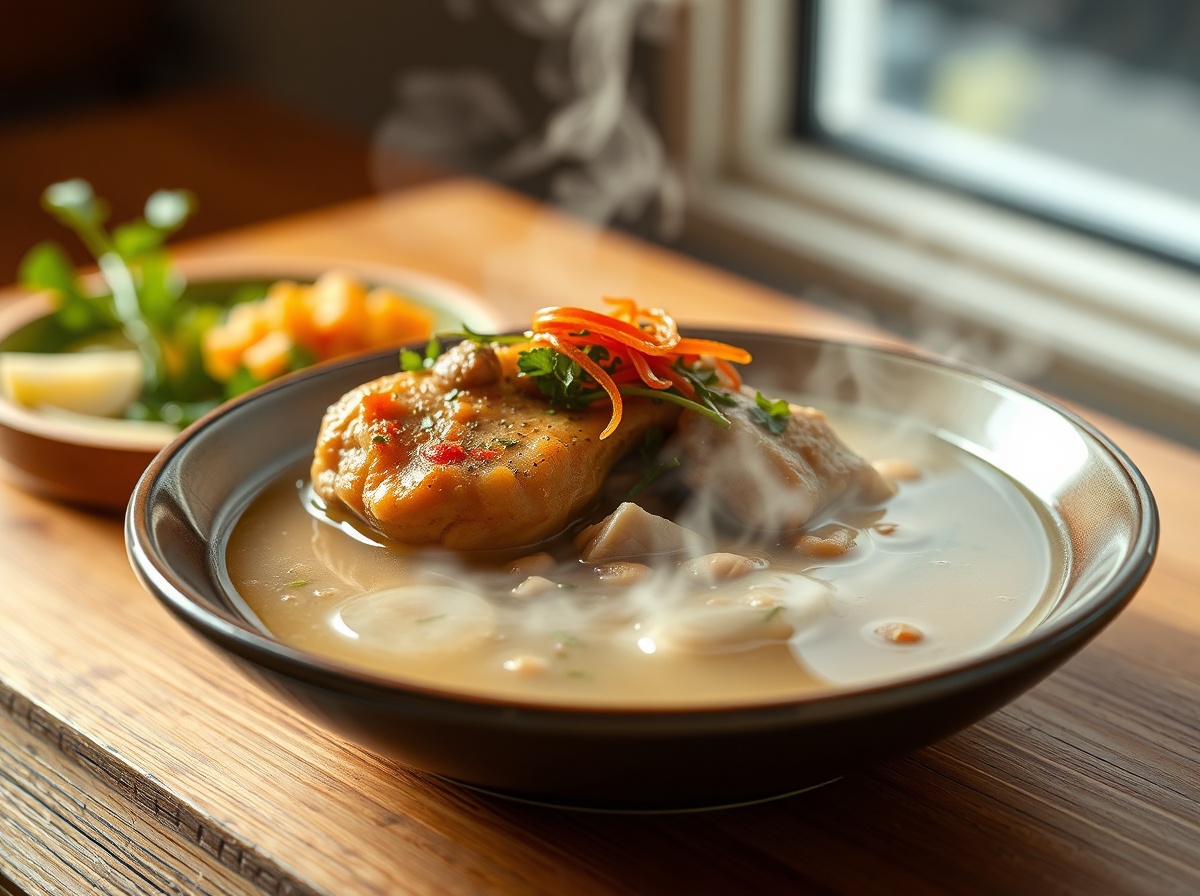
Preparing homemade chicken broth requires minimal active time but benefits from extended simmering:
– Prep time: 15-20 minutes
– Cooking time: 3-4 hours for regular broth; 12-24 hours for bone broth
– Cooling and straining: 30-45 minutes
– Total time: Approximately 4-5 hours (standard broth) or up to 25 hours (bone broth)
Unlike store-bought versions that often take just minutes to heat, this long simmering extracts maximum flavor and nutrients from your ingredients.
How to Make Chicken Broth (Step-by-Step)
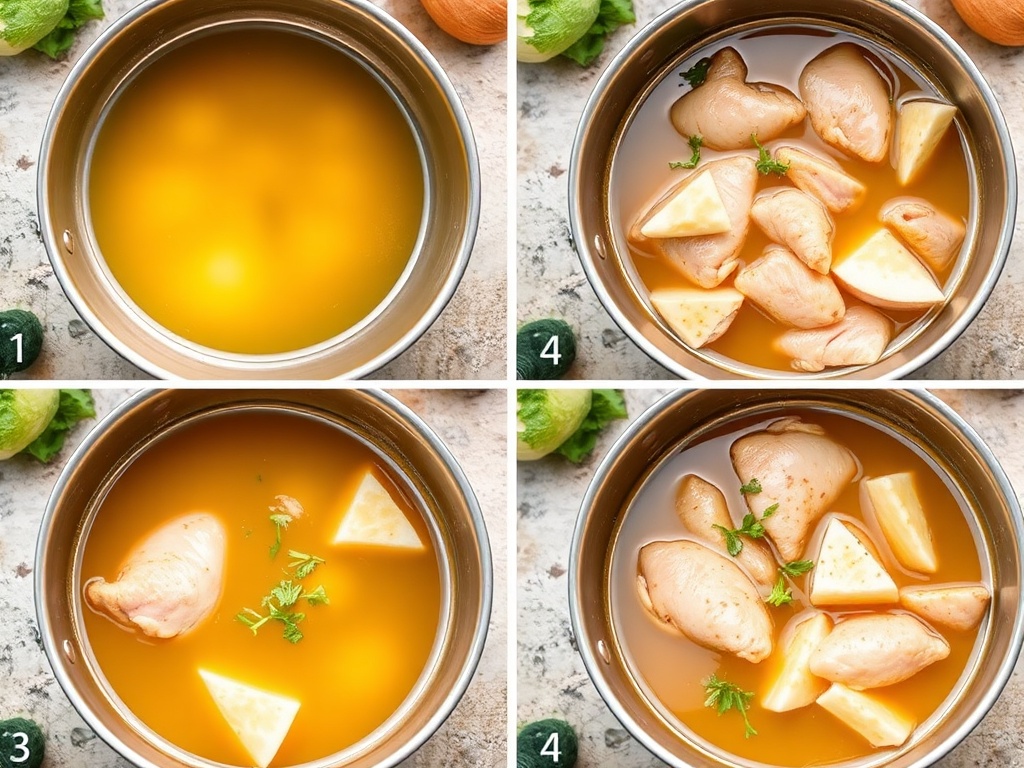
1. Prepare your ingredients: Roughly chop vegetables – no need for perfect cuts as they’ll be strained out later. If using a whole chicken carcass, ensure it’s clean and any excess skin is removed.
2. Add everything to the pot: Place chicken bones in your stockpot along with all vegetables, aromatics, and vinegar. The chicken broth recipe becomes more flavorful when you add vinegar at this stage, as it helps extract minerals from the bones.
3. Cover with cold water: Always start with cold water, covering ingredients by about 2 inches. Starting cold helps the broth stay clear and extract flavors gradually.
4. Bring to a simmer: Heat on medium-high until it reaches a boil, then immediately reduce to a low simmer. Never boil vigorously as this can make your broth cloudy.
5. Skim the surface: During the first hour, use a spoon to skim off any foam or impurities that rise to the surface. This ensures a clearer broth.
6. Simmer patiently: Maintain a gentle simmer for 3-4 hours for standard broth or up to 24 hours if you’re making how to make chicken broth with maximum bone nutrient extraction.
7. Strain thoroughly: Using a fine-mesh strainer, strain the broth into a large container, discarding solids.
8. Cool properly: Allow broth to cool slightly before refrigerating. For faster cooling, place the container in an ice bath.
Nutritional Benefits of Chicken Broth
Homemade chicken broth offers numerous health benefits:
– Rich in collagen and gelatin for joint and skin health
– Contains minerals like calcium, magnesium, and phosphorus
– Provides easily digestible amino acids
– Supports gut health and immune function
– Contains natural electrolytes for hydration
– Lower sodium than store-bought versions when made at home
Expert Tips for the Best Chicken Broth
– Roast bones first: For deeper flavor, roast chicken bones at 400°F for 30 minutes before simmering.
– Pressure cooker method: Use an Instant Pot to make broth in 60-90 minutes instead of several hours.
– Asian-inspired variation: Add ginger, star anise, and lemongrass for a Thai or Vietnamese flavor profile.
– Vegetable scraps: Save vegetable trimmings in a freezer bag to use in your next batch.
– Herb bundles: Create a bouquet garni with fresh herbs tied together for easier removal.
Common Mistakes When Making Chicken Broth
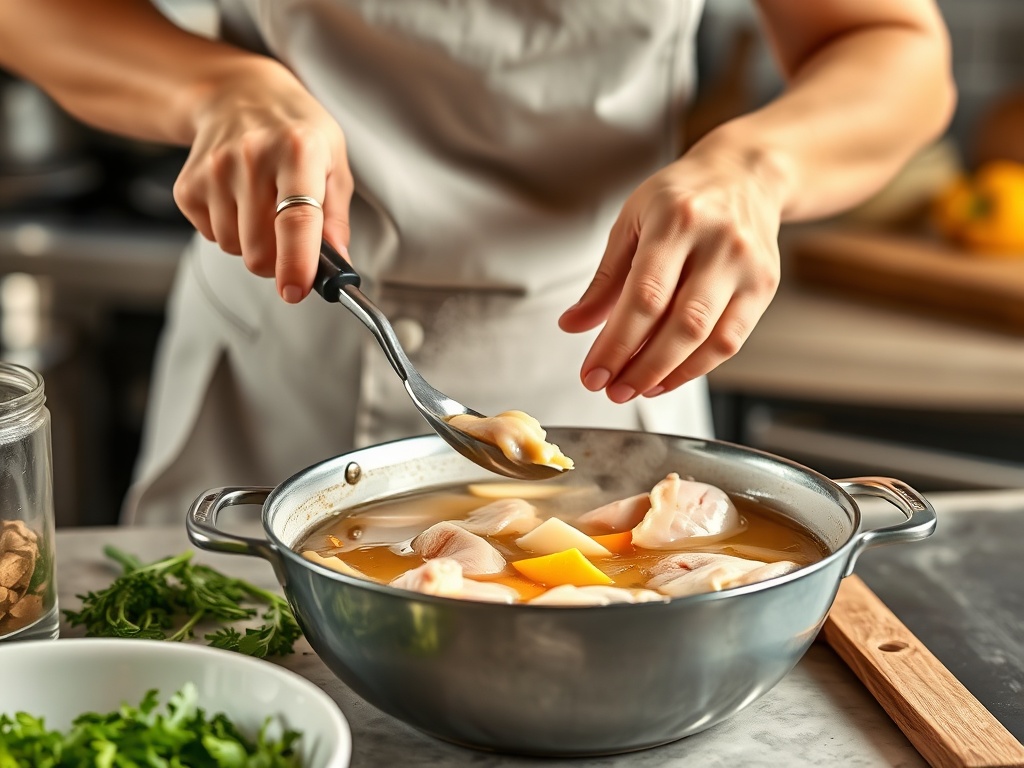
1. Boiling instead of simmering: A vigorous boil creates cloudy broth and can destroy delicate flavors.
2. Not skimming: Failing to remove foam results in off-flavors and a murky appearance.
3. Adding too many ingredients: Overfilling the pot can dilute flavors.
4. Under-seasoning: While you should avoid over-salting, completely unseasoned broth lacks depth.
5. Rushing the process: Good broth requires time for flavors to develop fully.
How to Store Chicken Broth
– Refrigerate cooled broth for up to 5 days in airtight containers.
– Freeze broth for up to 3 months in freezer-safe containers, leaving headspace for expansion.
– Freeze in ice cube trays for convenient small portions to add to recipes.
– For longer storage, pressure can your broth following safe canning guidelines.
– A layer of fat on refrigerated broth helps preserve it – simply remove before using.
Conclusion
Mastering this chicken broth recipe is a game-changer for your home cooking. The process of learning how to make chicken broth might seem time-consuming initially, but the flavor and health benefits are well worth the effort. Once you experience the rich taste of homemade broth and see how it elevates your soups, stews, and sauces, you’ll never want to return to store-bought versions. Start with this basic recipe, then experiment with different ingredients to create your perfect flavor profile.
Frequently Asked Questions About Chicken Broth
Can I make chicken broth in a slow cooker?
Yes! Place all ingredients in a slow cooker, cover with water, and cook on low for 10-12 hours for a hands-off approach.
My broth didn’t gel when refrigerated. Did I do something wrong?
Not necessarily. Gelling depends on the collagen content of your bones. For a more gelatinous result, include more joint bones, feet, or wings next time.
Can I reuse bones for a second batch?
Yes, though the second batch will be weaker. This “remouillage” or second stock can be used to cook grains or as a base for the next fresh batch.
Is cloudy broth still good to eat?
Absolutely! Cloudy broth is perfectly safe and often more flavorful, just less visually appealing for clear soups.
How can I increase the nutritional value of my broth?
Add mineral-rich vegetables like seaweed, medicinal mushrooms like shiitake, or herbs such as turmeric for additional health benefits.